
What Does “Off‑Market Home Sale” Actually Mean

What Usually Defines an Off-Market Sale
- Not publicly listed: Your home isn’t on Zillow, Realtor.com, Redfin, or the MLS that most agents use.
- Private negotiations: Buyers often learn about the property through direct outreach, investors, cash buyers, or networking.
- Fewer eyes — more control: The transaction happens with limited marketing exposure, keeping details more discreet.
Common Off‑Market Scenarios
- A homeowner contacts a cash home buyer directly.
- A real estate investor reaches out with an offer.
- The seller works with a private network or agent with off‑market connections.
What It’s Not
- It’s not an unrecorded sale — public records still record transfers.
- It’s not illegal or shady if done transparently and with proper documentation.
In practical terms, off-market selling usually means no public listing, no open houses, fewer moving parts, and often a faster path to closing.
When Selling a Home Starts to Feel Overwhelming
Not every homeowner begins by planning an off-market home sale. Sometimes the idea only comes up when the usual process starts to feel harder than expected — too many decisions, too many moving parts, or simply too much going on at the same time. A house may need work, timing may suddenly matter more than getting every last dollar, or life may already be full enough without preparing for showings and waiting through uncertainty. In situations like that, selling a house off market can start to feel like a practical option simply because it may involve less.
Why Some Homeowners Choose to Sell Off-Market
Many homeowners prefer selling a house off market for reasons that go beyond convenience. In many cases, the decision has less to do with finding a shortcut and more to do with choosing a process that feels more manageable.
Speed and Simplicity
Traditional sales can stretch over weeks or months, often involving staging, repeated showings, inspection periods, financing delays, and negotiations that may still fall apart. An off-market home sale often moves more directly, especially when both sides are clear about timing from the beginning.
No Showings or Open Houses
For many sellers, preparing a home for strangers to walk through repeatedly can become exhausting. Coordinating schedules, keeping everything presentable, and adjusting daily life around showings is something some homeowners simply prefer to avoid.
Sell “As‑Is”
Many off-market buyers are open to purchasing properties in their current condition, which means repairs are often optional rather than expected.
Confidentiality
In some situations, privacy matters more than exposure. That may be true during an estate transition, a divorce, or a move someone prefers to handle quietly. For some homeowners, keeping the process private also helps avoid outside attention during a period that already feels personal enough.
Lower Costs
Without staging, fewer prep costs, and often fewer fees tied to listing, the financial side can also feel simpler.
Control Over Timeline
Some sellers need flexibility more than anything else — whether that means closing quickly or waiting a few extra weeks to line up the next step.
Who Off-Market Selling Is — and Isn’t — Right For
Off-market selling is not the right fit for every homeowner, but in certain situations it can make far more sense than a traditional listing.
Situations Where Off-Market Sell Often Fits Naturally
✔ Homeowners dealing with repairs, outdated systems, or condition issues that make listing feel heavier than expected.
✔ Executors handling an inherited property who want clarity without months of decisions.
✔ Owners facing timing pressure — whether because of relocation, financial pressure, or a major life change.
✔ Landlords who no longer want the responsibility of ongoing repairs, tenants, or uncertainty.
When a Traditional Listing May Still Be the Better Choice
✔ Owners focused primarily on achieving full market value and willing to wait for the right buyer.
✔ Properties that are highly updated, visually strong, and likely to benefit from broad exposure.
✔ Sellers comfortable preparing the home, managing showings, and moving through a longer negotiation process.
✔ Those who feel more comfortable seeing how buyers respond before committing to a single offer or direction.
Off-Market vs Renovate vs Rent vs List on MLS
An off-market home sale is only one of several paths a homeowner can consider. In some situations, selling directly may feel like the clearest option. In others, it may make more sense to renovate, hold the property as a rental, list it publicly, or sell a house without MLS and keep the process more private. The right choice usually depends less on theory and more on what the property needs, how much time and energy is available, and what matters most in the current moment.
Selling Off-MarketSelling off-market can feel like the right path when a homeowner prefers dealing directly rather than bringing the property into full public exposure. In many situations, the conversation becomes clearer early, with one buyer, one negotiation, and a process that often resembles a private home sale more than a traditional listing. For some sellers, that alone creates a sense of steadiness that matters more than exploring every possible path.
Renovating Before SellingFor some homeowners, renovating before selling can be the right move, especially when the house only needs a manageable level of work and there is enough time to approach it thoughtfully. Improvements such as paint, flooring, lighting, or updating key spaces can change how buyers experience the home and often help it compete more strongly once listed. This option usually fits owners who want to prepare carefully before going to market and are comfortable managing the extra decisions that come with that process.
Keeping the Property as a RentalFor homeowners who do not need immediate liquidity, keeping a property as a rental can be a meaningful long-term option. A house that is in a stable location, has rental demand, or already performs reasonably well may continue creating income while also preserving future flexibility. This path often appeals to owners who are comfortable thinking beyond the current moment and see value in holding rather than exiting right away.
Listing on the MLSA public listing can be especially appropriate when a home shows well, photographs strongly, and is likely to benefit from wide buyer exposure. In many cases, the MLS creates opportunities to compare multiple offers and allows the market itself to help define where value sits. This route often fits sellers who want to let demand develops openly before making a decision.
What About Selling by Owner (FSBO)?Some homeowners prefer handling the sale themselves, especially when they already know the buyer or feel comfortable managing direct conversations. Selling by owner can also feel natural for those who want to sell a house without MLS, while staying closely involved from pricing through paperwork. In the right situation, it can be a practical route for those who prefer direct decision-making from beginning to end.
Off‑Market vs. MLS Listing – What’s the Real Difference?
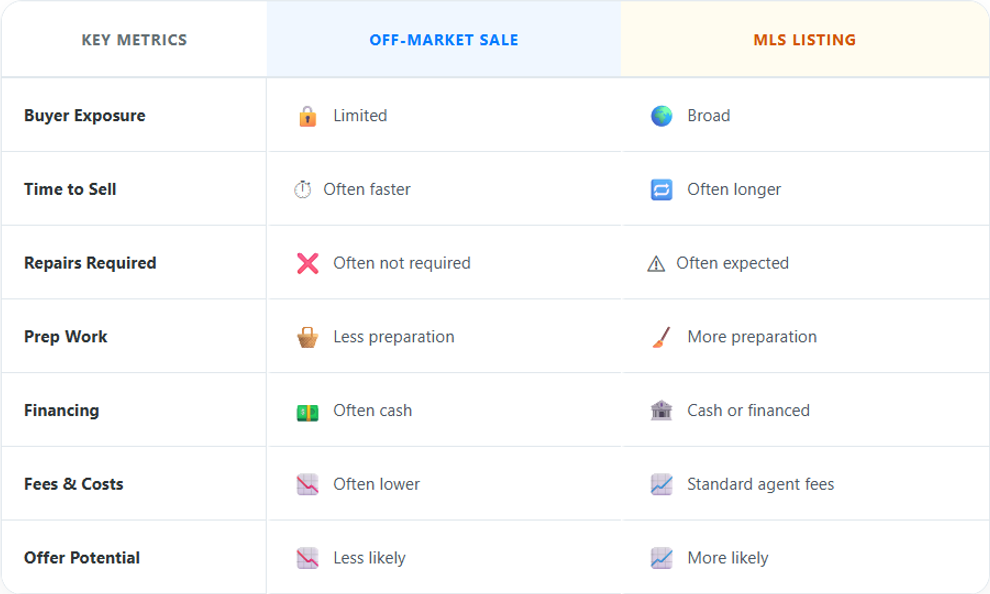
Both paths can lead to a successful sale, but the experience often feels very different depending on how much exposure, preparation, and flexibility a seller wants.
Why Exposure Matters
MLS listings usually create broader visibility, which can increase competition and sometimes lead to stronger offers — especially when a property is updated and ready for the retail market.
Why Speed Matters
Off-market sales often appeal to homeowners who value clarity, fewer moving parts, and a more direct timeline, even if the process involves fewer competing buyers.
A Simple 6-Step Look at How an Off-Market Sale Usually Moves Forward
While every transaction has its own pace, many off-market sales follow a fairly similar structure. The details may vary depending on the buyer, the property, and the seller’s situation, but in most cases, the process becomes much clearer once each stage is understood.
Step 1: The First Conversation
The process usually begins with a simple conversation. Basic questions help clarify the property’s condition, major systems, location, and timeline, but also what the homeowner is hoping to solve through the sale. In many cases, this early exchange matters just as much as the property itself because it shapes how the next steps are approached.
Step 2: Reviewing the Property and Preparing an Offer
Once the main details are clear, the buyer usually reviews local comparable sales, considers the property’s current condition, and estimates what kind of work may be needed. Based on that, an offer is prepared—sometimes within hours, sometimes after a little more review.
Step 3: Taking Time to Consider the Terms
Not every seller decides immediately, and many take time to understand whether the offer actually fits their priorities. Price matters, but so do timing, flexibility, and whether the overall direction feels right.
Step 4: A Short Property Walkthrough
If both sides want to move forward, a brief walkthrough usually follows. This is often less formal than a traditional showing and mainly serves to confirm that the property matches what was discussed earlier.
Step 5: Title Work and Escrow
Once an agreement is signed, the title company begins its work. That usually includes opening escrow, checking title records, and making sure the property is legally ready to transfer without unexpected issues.
Step 6: Closing and Transfer of Funds
Closing usually takes place through a title company or attorney, either in person or remotely depending on the situation. Once the documents are signed and verified, funds are transferred and ownership changes hands according to the agreed terms.

How Off-Market Pricing Works — and What Shapes the Number
How Cash Offers Are Often Built
Estimated market value
− Repair costs
− Holding costs
− Buyer’s Profit margin
= Offer
What Usually Sits Behind the Numbers
Estimated Market Value
Repair Costs
Holding Costs
Buyer’s Profit Margin
A Simple Example
$175,000 estimated market value
− $35,000 repairs costs
− $9,000 holding and financing costs
− $30,000 buyer’s profit margin
= $101,000 offer
Why Offers Can Differ

Legal, Title, and Paperwork Considerations in an Off-Market Sale
Essential Legal Protections
- A clear written agreement matters: A signed, clear agreement of terms is the foundation of a safe transaction. It should outline the sale price, closing date, responsibilities of both parties, and any contingencies. Having this in writing protects you if any disagreements arise.
- Title work is still a critical step: Even in off-market sales, a thorough title search ensures there are no liens, unpaid taxes, easements, or ownership disputes that could prevent a clean transfer. For example, if the home has an old tax lien, it could delay or invalidate the sale if not addressed in advance.
- Make sure the legal ownership is clear before moving too far forward: If more than one person owns the property, if the home was inherited, or if ownership recently changed, the sale may require additional signatures or documentation before closing can happen.
- Disclosure requirements: Most states require sellers to disclose known property defects, such as foundation issues, water damage, or pest infestations. Full transparency not only avoids legal liability but also builds trust with the buyer.
- Closing documents remain the same: Standard real estate documents — deeds, affidavits, and settlement statements — are still required. A licensed title company or attorney will ensure all paperwork is completed correctly, recorded, and legally binding.
What Often Makes Off-Market Closings Feel Simpler
Taxes, Liens, and Other Costs That Can Affect Your Final Proceeds
Selling a home off-market can be faster and more convenient than a traditional MLS listing, but the number written in the agreement is not always the same as the amount a seller ultimately receives. Existing debt, taxes, and closing-related adjustments can still affect the final proceeds, so it helps to understand what may be deducted before closing is complete.
- Mortgage balances and liens are paid first:
If the property still has a mortgage, tax lien, judgment, or other recorded debt, those amounts usually come out of the proceeds before funds are released. - Property taxes are usually adjusted at closing:
Sellers typically pay only for the portion of the year they owned the home, while the buyer takes over the remainder. - Capital gains may apply depending on your situation:
If the home increased significantly in value, part of the profit may be taxable — although many primary residence sellers qualify for exclusions. - Closing costs still exist, even without agent commissions:
Title charges, recording fees, attorney fees, and similar items still affect the final number. In many off-market transactions, it is common for buyers to cover most closing costs, although that can still vary depending on how the agreement is structured.
Common Mistakes Homeowners Make When Selling Off-Market
Off-market selling is convenient — but there are pitfalls. Here are a few you should avoid:
- Mistake #1: Assuming the First Serious Offer Is Automatically the Right One
Not every serious offer is automatically the right fit. Sometimes the strongest decision comes from understanding how the number was built and whether the terms actually match your priorities. - Mistake #2: Focusing Only on Price and Ignoring the Terms
Closing timeline, contingencies, flexibility, and who covers certain costs can matter just as much as the offer itself. - Mistake #3: Moving Too Quickly Without Clarifying Ownership or Payoffs
Inherited properties, shared ownership, mortgages, or older liens can create delays if they are discovered late. - Mistake #4: Underestimating the Value of Buyer Credibility
Proof of funds, communication style, and a buyer’s ability to actually close often matter more than sellers expect. - Mistake #5: Comparing Off-Market Offers Only Against Each Other
Sometimes the right question is not which off-market offer is highest, but how the offer compares to your other available paths — including listing, renting, or waiting. - Mistake #6: Comparing Your Home to the Wrong Sale
Many sellers naturally compare their home to Zillow or to a nearby sale. But if that property was renovated or fully market-ready, the comparison may not reflect true apples-to-apples value.
How to Recognize a Legitimate Cash Home Buyer
Selling a home off-market can feel straightforward, but the buyer still matters as much as the offer itself. A clear process, consistent communication, and the ability to close when promised often separate serious buyers from situations that become frustrating later.
- Watch for red flags:
Be cautious of buyers with an unclear business address, requests for upfront fees, or pressure to sign documents immediately. These are signs that the buyer may not be legitimate. - Look for transparency and professionalism:
A reliable cash buyer should have local market experience, clear communication, and a visible business presence that helps sellers understand who they are dealing with. - Ask key questions:
Before committing, ask how long they’ve been buying homes, what’s included in their offer, if there are any fees for you, and what their expected closing timeline is. Legitimate buyers will answer confidently and clearly. - Verify credentials:
Check online reviews, confirm their business license, and request references from previous sellers. This ensures that the buyer has a solid track record and operates ethically.
Trust your instincts: If something feels off or rushed, pause and reassess. A reputable buyer will respect your timeline and provide transparency without pressure.
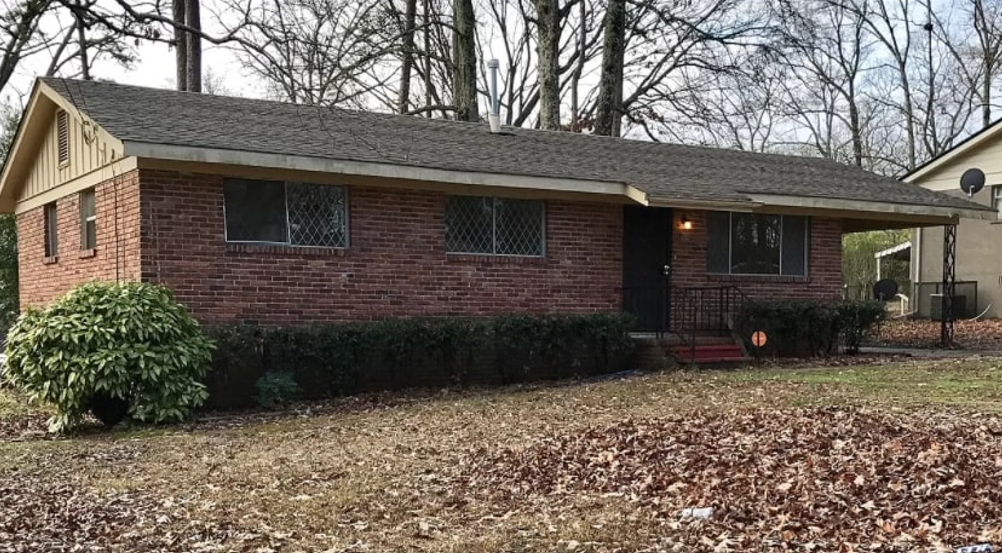
Selling Off-Market in Birmingham, AL — What Makes This Market Different
While the fundamentals of an off-market sale are similar in most places, local market conditions still shape how offers, timelines, and buyer activity actually look in practice. Alabama also benefits from being part of the broader Sun Belt region, where affordability, job movement, and long-term population shifts continue to keep many Southern housing markets on investors’ radar.
In Birmingham, certain patterns stand out.
Strong Local Demand
Birmingham continues to attract both traditional buyers and investors, especially in neighborhoods where older housing stock creates renovation opportunities. In many parts of the metro area, that keeps off-market conversations active even when sellers choose not to publicly list.
Investor Interest
Many local buyers focus on older homes that need updating, rental properties with stable demand, or houses located near major job centers, medical districts, and universities. Birmingham also continues to attract interest from out-of-state and even international investors, largely because its price points remain relatively affordable compared with many larger U.S. markets. That often creates steady demand for homes that may not be ideal for the retail market without repairs.
Neighborhood Variances
Different Birmingham neighborhoods — from downtown to suburban areas — command different pricing dynamics. A local buyer or investor familiar with these markets may provide a more accurate offer. Factors like school districts, amenities, and proximity to major highways can influence offers significantly, so understanding neighborhood trends is crucial.
Local Laws and Closing Norms
Alabama closings are generally straightforward, but title work, disclosure, and recorded transfer requirements still apply the same way they do in any other sale. A local title company usually helps keep that process organized from contract to closing.